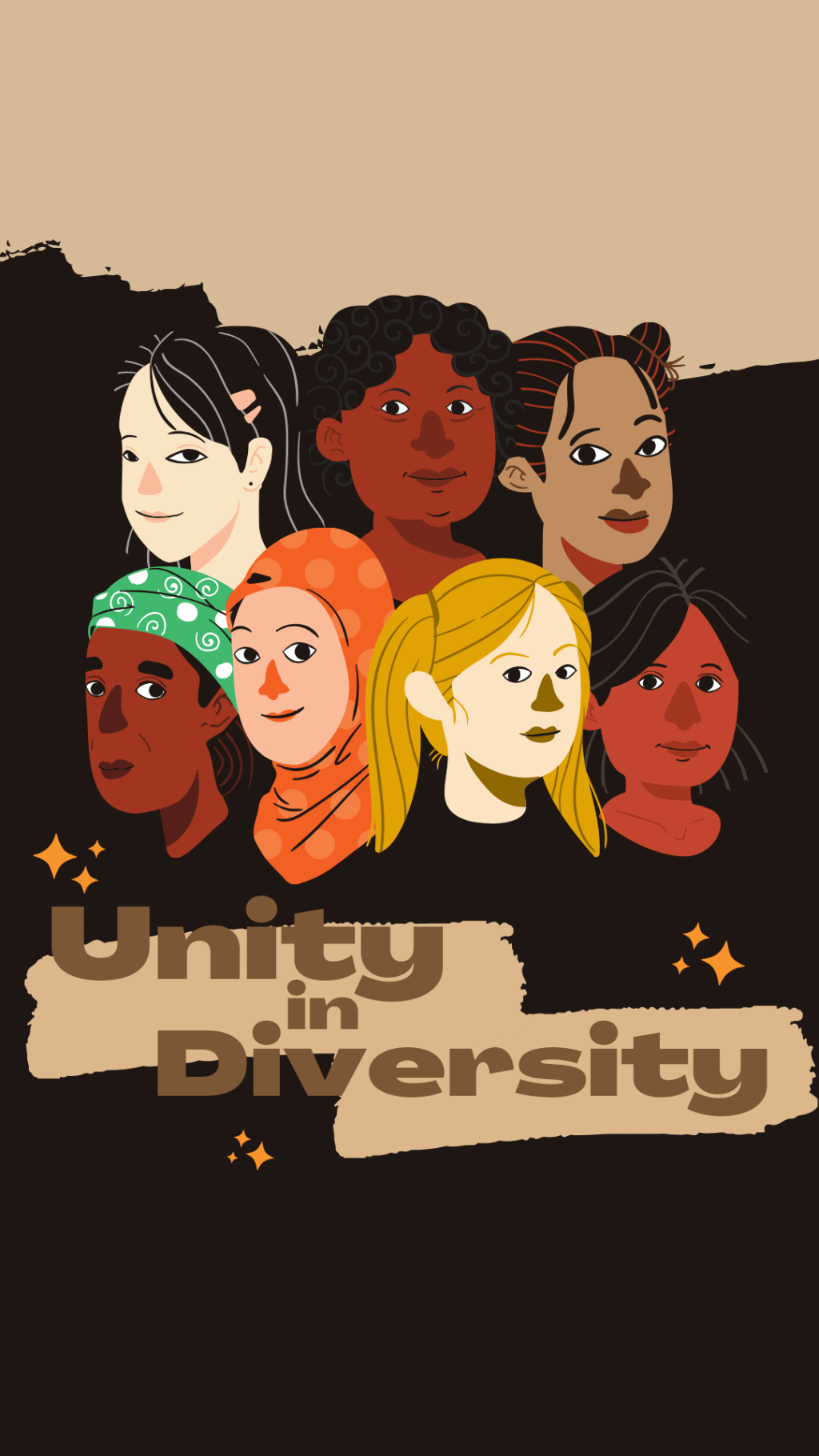
The world is such an amazing place. It is beautifully diverse and dynamic. As vast as the physical space of the earth is, so is the cultural/behavioural diversity of its inhabitants. Over the years, the world has witnessed a significant amount of increased intercultural interactions through Globalisation. The advent of information and communication technology, and the consistently improving navigational systems technologies are said to have compressed the world to a mere global village, exposing humans to endless interactions.
According to Foley and Lahr, a report by Price’s Atlas of Ethnographic Societies has recorded over 3,814 different cultures around the globe. So, as we traverse the nooks crannies of the earth, beholding its hubris of diversity, we are also faced with a daunting challenge of having to contend with the peculiarities of a myriad of cultural identities, as well as acknowledging their significances to the various peoples of the world.
In this regard, our higher exposure to the world has attracted an even greater responsibility of embracing its cultural plurality. But, unfortunately, our individual cultures have a way of trapping us; programming our minds to regarding us and ours as not only superior, but supreme. Our traditions and upbringings have a way of encoding some biases in our minds that become almost impossible to erase. Also, beyond our cultural differences, every one of us is bequeathed with one form of privilege or the other which makes us unique and distinct. Therefore, these disparities are the major obstacles to achieving a holistic Diversity, Inclusion, Belonging and Equity. They both anchor the chain of behavioural ligaments that interlinks Bias, Prejudice, Discrimination, Systemic Inequity, and Oppression.
Meanwhile, these attributes can be quite translucent, yet complicated. They are either conscious or unconscious behavioural attributes. Take for instance, judging by my presumed self-consciousness towards treating people right, and constantly seeking grey areas in order to accommodate all and sundry, one would infer that I was as much an inclusive person than not. But, that notion may have come into question when I first arrived in Canada. I remember the first day an elderly person held out the door for me in a mall. My exaggerated appreciation had only been as a result of a shadowed guilt and embarrassment. The same was the self-deprecating shame I would bear for many days after unconsciously hesitating to use a gender neutral washroom for the first time.
Evidently, the distinctiveness of our cultural lenses can either result in an obvious Systemic Oppression, an Unexpressed Resentment, or even in a seemingly insignificant Unconscious Biases. In other words, even our innocent or unintentional interactions with others can result in micro-aggressions. Surprisingly, micro-aggressions which are defined as “the subtle verbal and nonverbal slights, insults, indignities and denigrating messages directed toward an individual due to their group identities, often automatically, unconsciously and unintentionally” constitute the most common forms of discriminations.
To put it another way, it is the little things that hurt the most. Such things as misspelling of names (implicit discrimination); saying the wrong things due to basic discomfort, unconscious bias, and privilege; etc. are the bane of inclusion and equity. We, therefore, must strive to consciously make efforts towards curbing them. In the words of Dereca Blackmon, the key to practicing inclusion is to understand that it is a mind-set. The concept of Diversity, Inclusion, Belonging and Equity is more of a journey than it’s a destination. It is such which is to be approached like a marathon rather than a sprint. And as a process, it should form the core of our lifelong learning.
Inclusion is a process that takes Self-awareness, Courage, Commitment and Growth. It entails Empathy, Emotional Intelligence, Allyship (greater awareness, connection, and action), mastering the use of Language, and Effective Listening. Furthermore, everybody has to be involved as we all are role models in the process. By this, DIBE has to form a major part of everyone’s daily life be it at home, in worship places, and work places.
Ronald Reagan, the 40th U.S president once said: “I have always believed that a lot of troubles in the world will disappear if we were talking more to each other instead of talking about each other”. Obviously, the ebullient leader was admonishing us on the need of mutual tolerance, and identifying our places of privileges and using them positively to impact others. Being willing to accept mistakes and responsibilities, and being willing to learn takes humility which is the same as practicing our emotional intelligence. It means that we must learn to apologize when we misstep and commit to improve and grow.
Moreover, we must learn to challenge stereotypes. We don’t have to wait until it affects us directly before we act. As we all know, whenever a harm comes to the nose, the eye is no longer in a safe distance. Every one of us is susceptible to becoming a victim or an offender at some point. So, it is not just enough to sound politically correct, but to take conscious and genuine steps towards fostering inclusion. This is because we will only be paying ourselves forward by engendering a safer, more egalitarian and more conducive ecosystem for us all. With Diversity, Inclusion, Belonging and Equity, we are able to tear down the obstructive walls of discriminations, and build the world of our dreams.




 Michael Ogbu
Leave a comment